Robokiller Enterprise
Robokiller Enterprise
Robokiller Enterprise
Robokiller is the leading spam call and text blocker app in the U.S. Robokiller Enterprise is an extension of the flagship product that brings Robokiller’s spam blocking technology to business networks and teams. Pulled into the team in the brand's early stages, I've had the pleasure of participating in various avenues of its growth from the ground up.
Contributions
Team
Introduction to brand guidelines
All internal brand guidelines created at Mosaic were structured with a product intro, demographics, mission, then visual information. My process to create the first defined set of guidelines for Robokiller Enterprise (RKE) was as follows:
1. Gather existing knowledge on the product’s market positioning
2. Find patterns in our existing creative
3. Fill in gaps to draft a story around the product
The following images are excerpts from the Robokiller Enterprise guide, modified for display here.
Communicating a mission
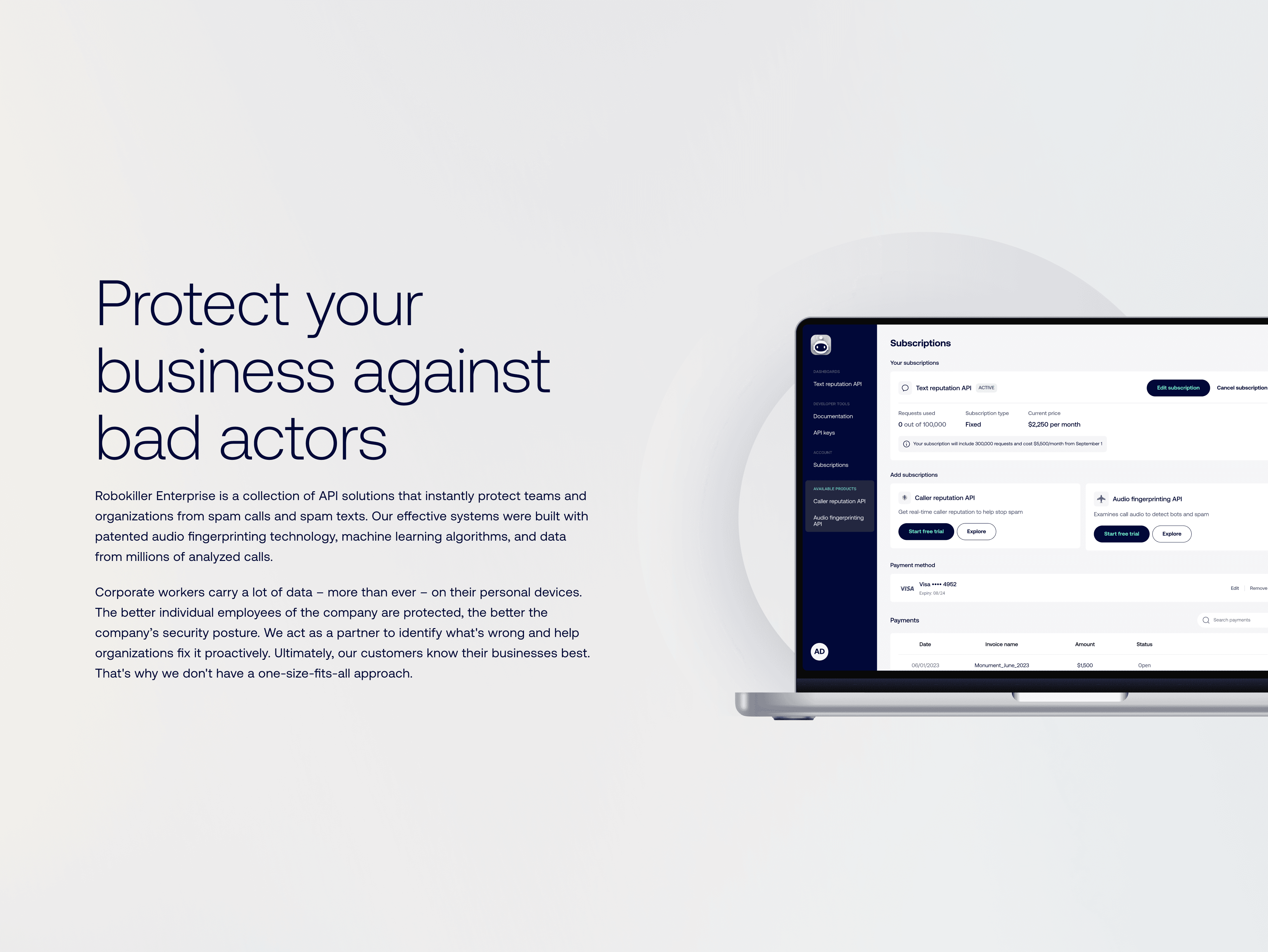
A key component to RKE's market positioning was its connection the successful Robokiller consumer product. How RKE would fit in as an extension of that was a helpful guiding question in narrowing down the brand's direction.
Robokiller solves problems for individual users at a click of a button like a hero. Our target enterprise client however, would be more hands-on with the technology and could hold a myriad of titles—IT professional, a call center manager, or even a small business owner. To cater to a range of knowledge RKE would speak as an ally and equal partner, not guardian or savior.
The goal of our messaging became to reduce barriers to comprehension of the overly technical while still presenting as subject-matter-experts that could walk you through the details.
Purposeful photography
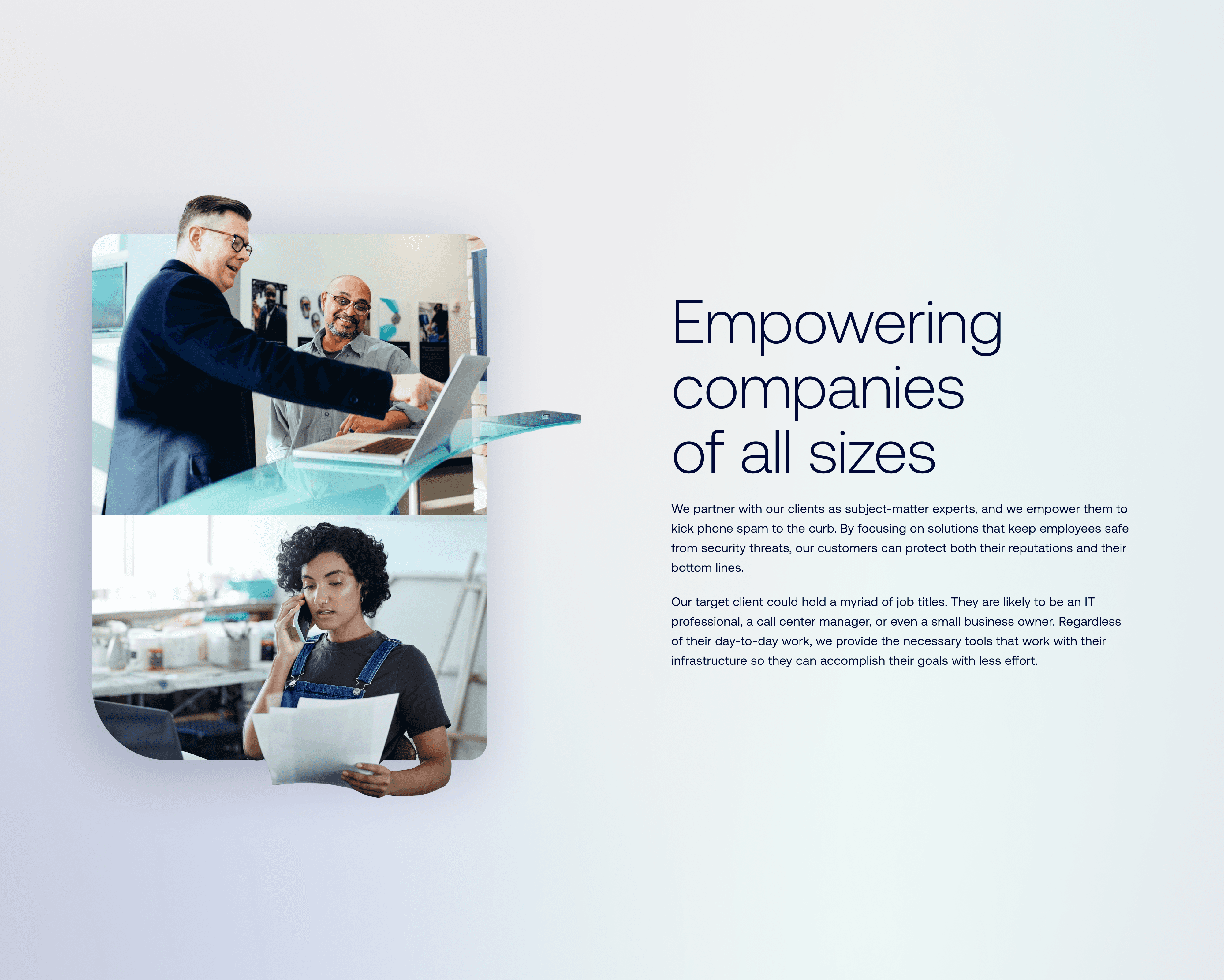
To have personalize imagery despite being constrained to stock photos, notes on texture, subject, and recoloring of photography were given with the goal of exuding confidence, professionalism, and a connectedness to both people and technology.
When sourcing images I looked for scenes in brightly lit spaces that could imply a story of productivity and success. To help subtly elevate the brand’s presence, I found that glassy textures and select items in an environment could be easily modified in
Photoshop to reflect brand colors.

Guiding design
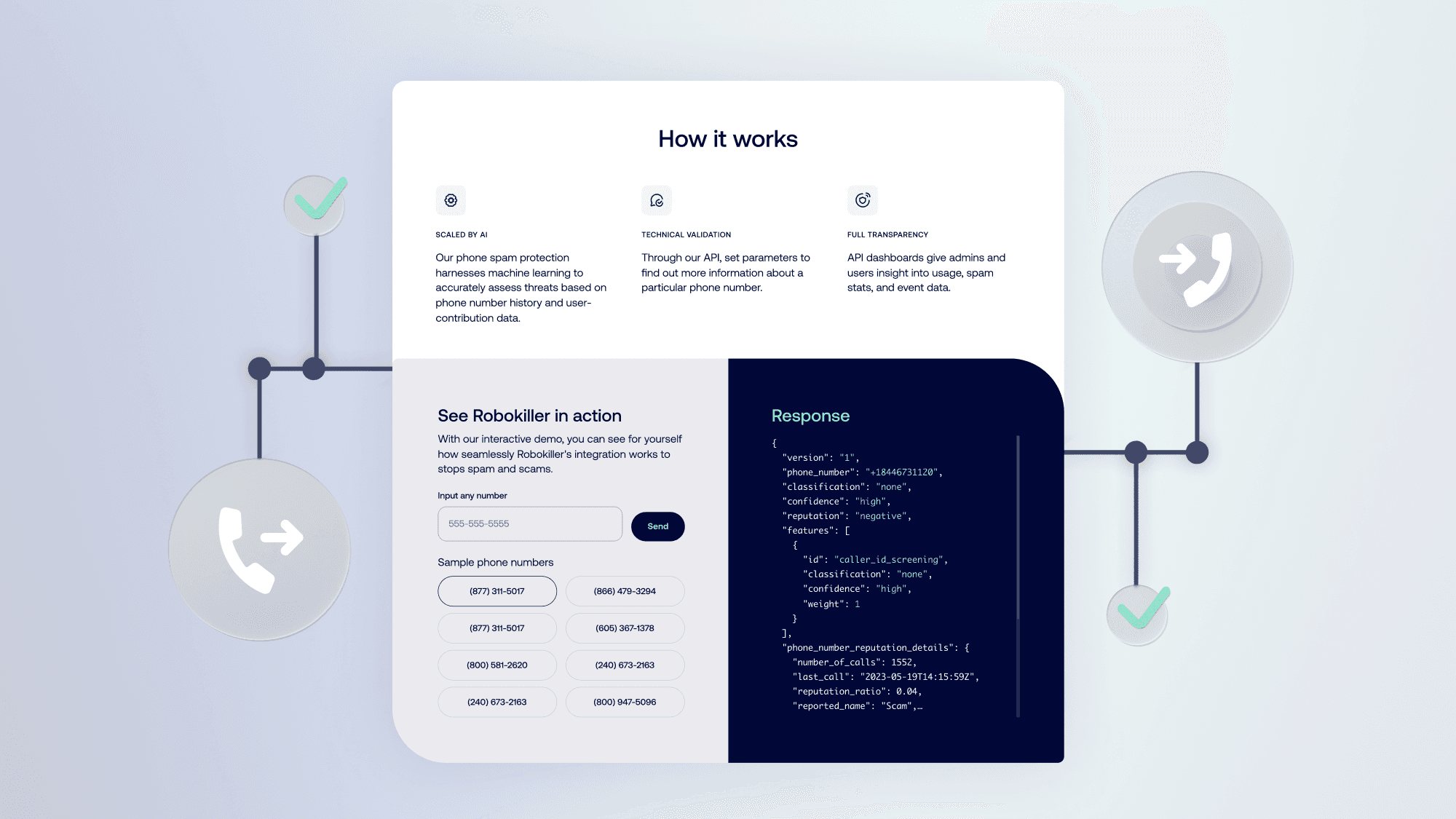
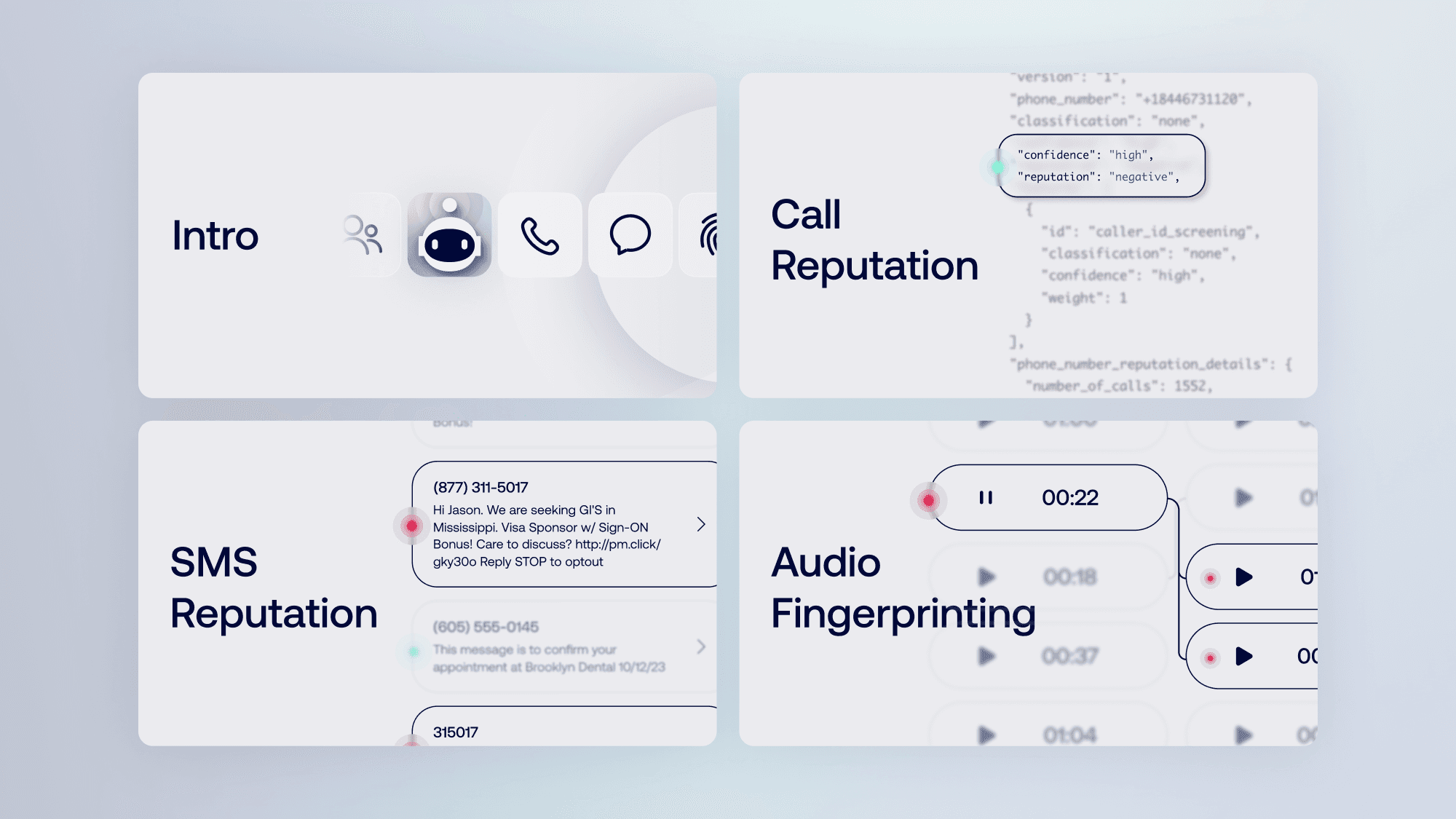
Initial Robokiller Enterprise design consisted of colors, minimal brand assets, and no written direction. Existing creative was mid-tone heavy, used thick lines and generally felt outdated. Due to the technical complexity of the product, graphics easily became overly wordy or unhelpful as designers attempted to communicate how things work. To elevate and standardize designs moving forward I modified existing elements and wrote guiding principles to follow.
-> Reduced similar colors and provided color descriptions and ratio to resolve confusion around "which blue" or "which grey" designers should use
-> Opt for thin lines and leverage additional textures (blurs, opacity) to reduce heaviness and add depth
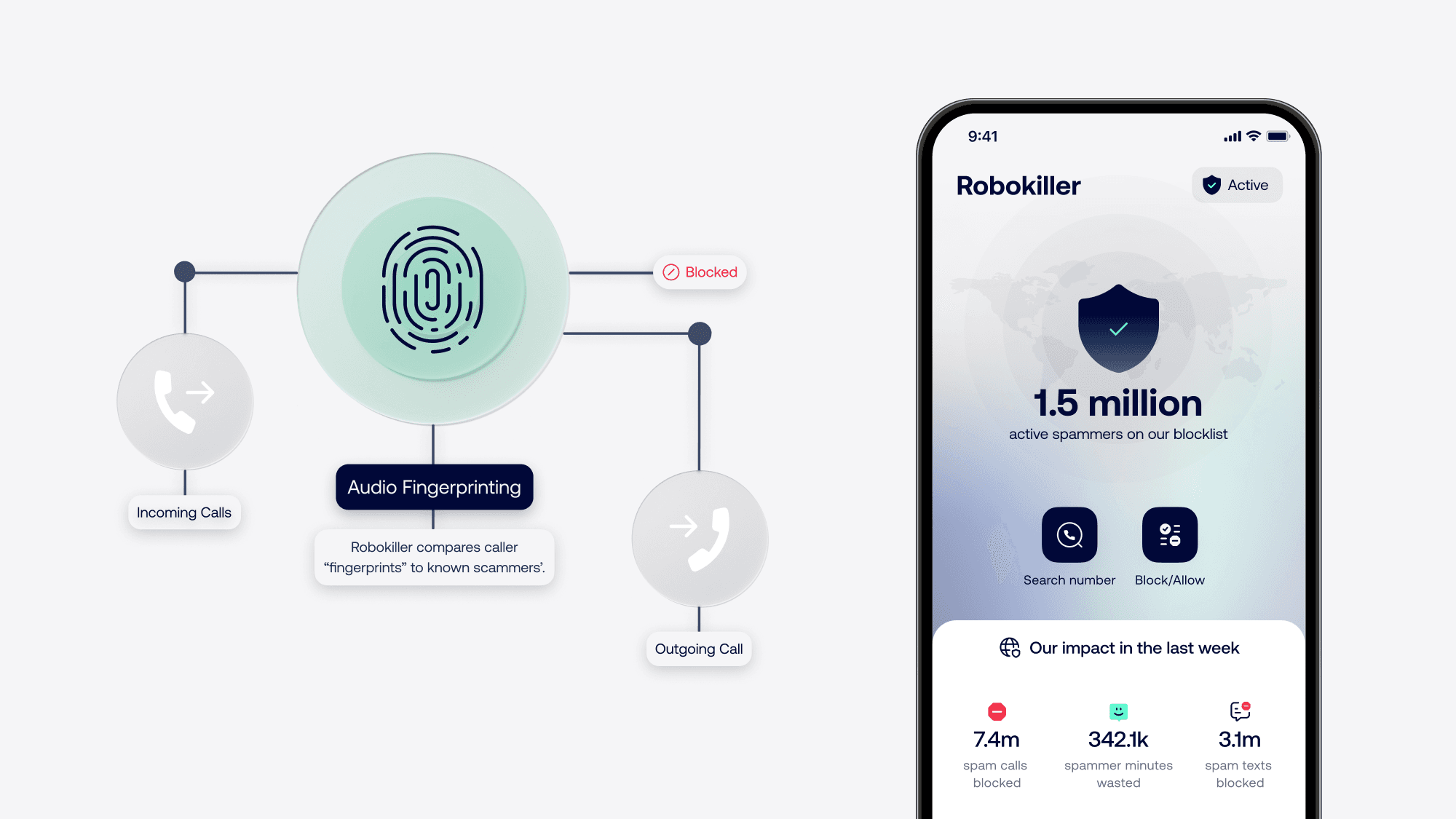
-> Keep infographic text succinct and purposeful, choosing to compliment technical explanations with visual assets that can add additional context instead.
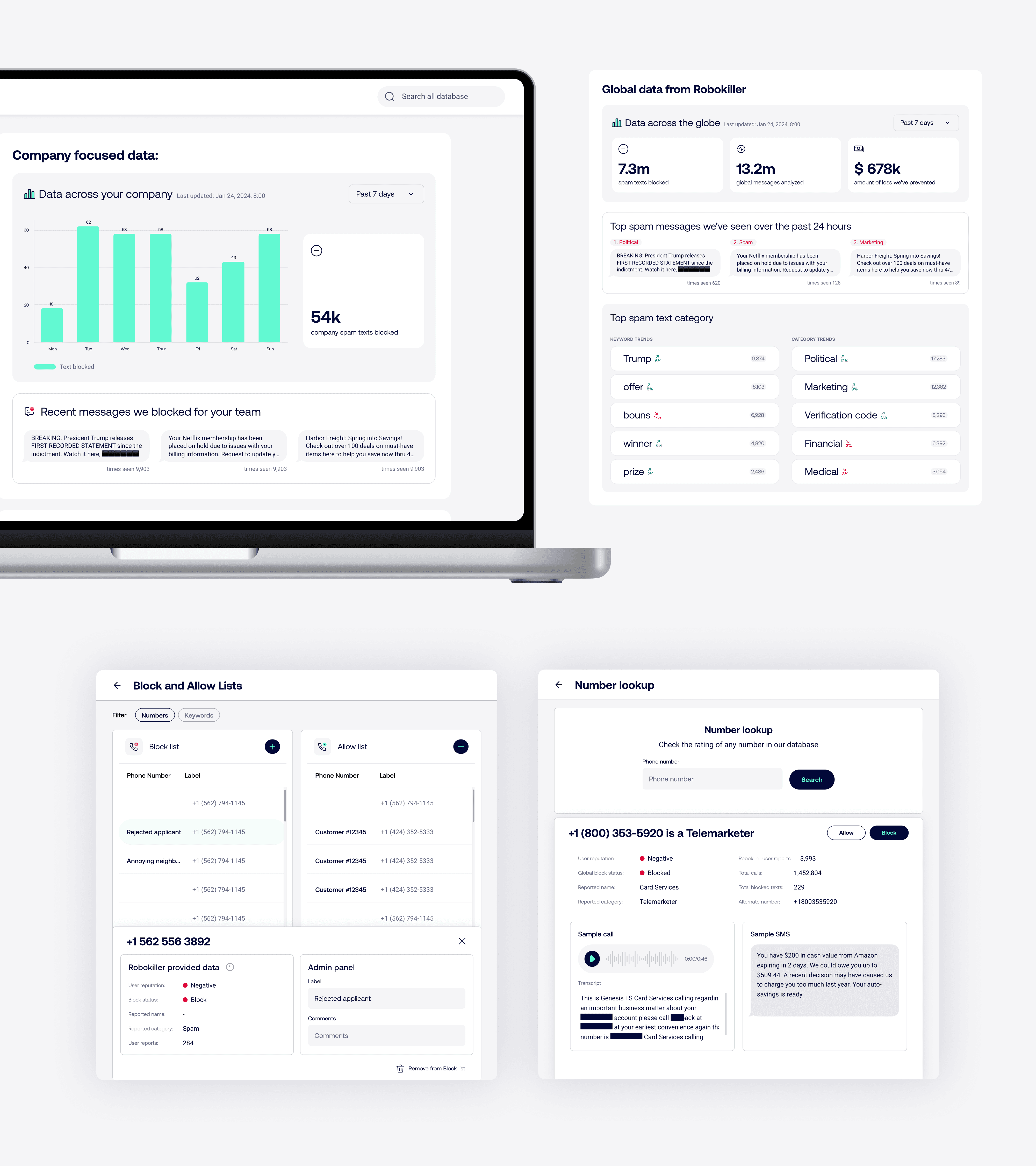
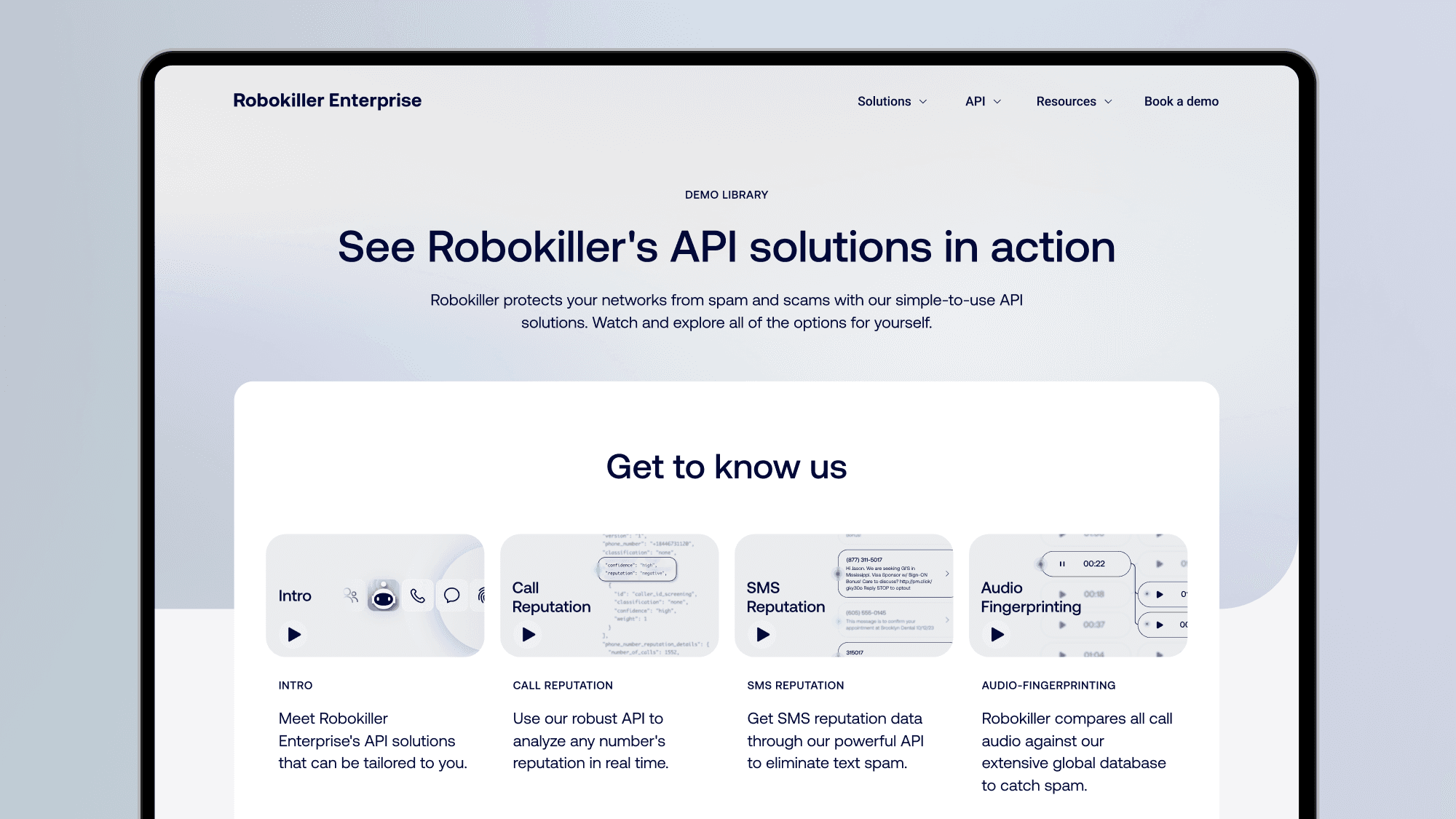
Product mockups and brand assets
Though exact technical abilities and limitations were unclear, lead product designer Lucija Fuček and I were tasked with creating highly flexible mockups for the Robokiller Enterprise dashboard. Our MVP consisted of scaled up versions of successful consumer features and system requirements such as known settings and login capabilities. Future states explored potential features and accompanying mobile application, all regularly reviewed with product and developers. The following sections highlight select contributions to the dashboard and mobile products and website design.

Introduction to brand guidelines
All internal brand guidelines created at Mosaic were structured with a product intro, demographics, mission, then visual information. My process to create the first defined set of guidelines for Robokiller Enterprise (RKE) was as follows:
1. Gather existing knowledge on the product’s market positioning
2. Find patterns in our existing creative
3. Fill in gaps to draft a story around the product
The following images are excerpts from the Robokiller Enterprise guide, modified for display here.
Communicating a mission
A key component to RKE's market positioning was its connection the successful Robokiller consumer product. How RKE would fit in as an extension of that was a helpful guiding question in narrowing down the brand's direction.
Robokiller solves problems for individual users at a click of a button like a hero. Our target enterprise client however, would be more hands-on with the technology and could hold a myriad of titles—IT professional, a call center manager, or even a small business owner. To cater to a range of knowledge RKE would speak as an ally and equal partner, not guardian or savior.
The goal of our messaging became to reduce barriers to comprehension of the overly technical while still presenting as subject-matter-experts that could walk you through the details.
Purposeful photography
To have personalize imagery despite being constrained to stock photos, notes on texture, subject, and recoloring of photography were given with the goal of exuding confidence, professionalism, and a connectedness to both people and technology.
When sourcing images I looked for scenes in brightly lit spaces that could imply a story of productivity and success. To help subtly elevate the brand’s presence, I found that glassy textures and select items in an environment could be easily modified in
Photoshop to reflect brand colors.
Guiding design
Initial Robokiller Enterprise design consisted of colors, minimal brand assets, and no written direction. Existing creative was mid-tone heavy, used thick lines and generally felt outdated. Due to the technical complexity of the product, graphics easily became overly wordy or unhelpful as designers attempted to communicate how things work. To elevate and standardize designs moving forward I modified existing elements and wrote guiding principles to follow.
-> Reduced similar colors and provided color descriptions and ratio to resolve confusion around "which blue" or "which grey" designers should use
-> Opt for thin lines and leverage additional textures (blurs, opacity) to reduce heaviness and add depth
-> Keep infographic text succinct and purposeful, choosing to compliment technical explanations with visual assets that can add additional context instead.
Product mockups and brand assets
Though exact technical abilities and limitations were unclear, lead product designer Lucija Fuček and I were tasked with creating highly flexible mockups for the Robokiller Enterprise dashboard. Our MVP consisted of scaled up versions of successful consumer features and system requirements such as known settings and login capabilities. Future states explored potential features and accompanying mobile application, all regularly reviewed with product and developers. The following sections highlight select contributions to the dashboard and mobile products and website design.